
Living in the Time That Is Here and Now: Reading the Fairy Tale ‘Momo’ in the Age of Time Performance
Michael Ende, Momo, 1973
A Fairy Tale for Adults
There are some fairy tales and works of children’s literature that make you think they should actually be read by adults.
Michael Ende’s fairy tale ‘Momo’ is one such work.
Although the story is set in the modern era, its opening is truly the world of a fairy tale (Märchen).
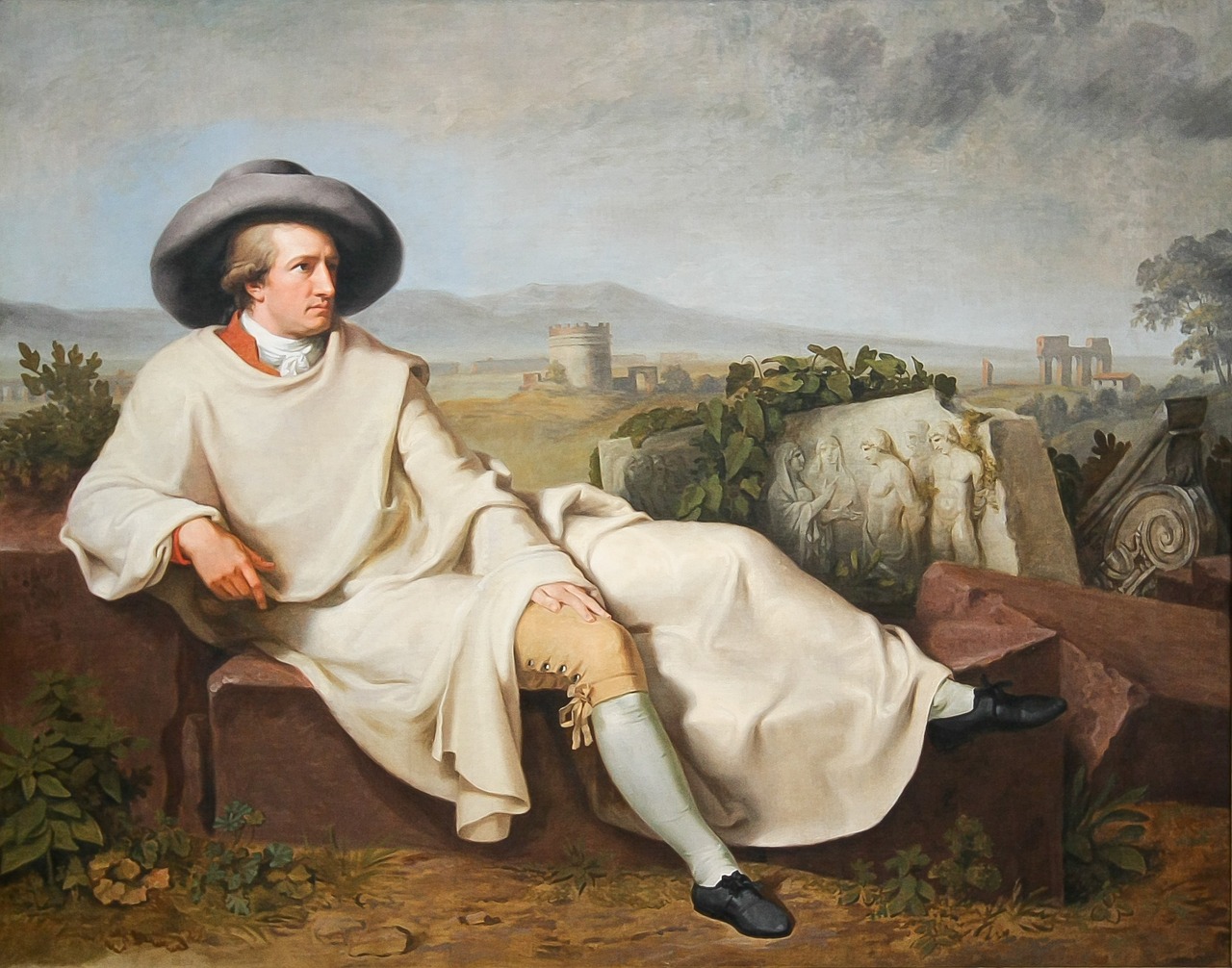
The story begins quietly and with a simple narrative style in a place on the outskirts of town where ancient ruins—reminiscent of Italy—remain, a place that is now rarely visited by anyone.
Momo is a mysterious girl living in the ruins of an old amphitheater.
She possesses one special ability.
That is,
──listening to what people have to say.
Someone is always coming to see Momo. They just have her listen slowly to their long stories. For some reason, just by doing that, people feel their hearts lighten and regain the color of life. By speaking, they recover the selves they had lost sight of.
Before long, people from all over the city naturally begin to gather around Momo. She doesn’t give special advice, nor does she do anything for them. There are no visible, special events. Even so, a leisurely time flows surely around Momo.
But──
One day, the ‘Grey Gentlemen’ suddenly appear there. They puff on cigars, are dressed in grey suits, and whisper to people in polite, cold words.
‘Save your time. If you eliminate waste, life will become much richer.’
From that moment on, the city gradually begins to change its appearance.
Children’s play disappears, adults’ conversations become shorter, and smiles become somewhat strained. The entire city begins to look greyish.
The spell-like phrase, ‘Time must be saved,’ quickly covers the entire society.
The ‘Grey Gentlemen’ of Today
The fact that this story was written in 1973 feels almost prophetic.
We live today surrounded by the incessantly ringing notification sounds of our smartphones.
Prioritizing efficiency, we try to understand things in as short a time as possible through means like double-speed playback, summaries, and clips.
‘Be more efficient,’ ‘It’s good for time performance,’ ‘We should increase productivity’──such phrases fly about daily.
When looking at this situation, those ‘Grey Gentlemen’ are likely no longer just existences within a story. Rather, they are appearing everywhere in society, especially in the modern age.
And the troublesome part is that they are not beings that have invaded from the outside. We invite them in ourselves, politely offer them seats, cater to their moods, and even willingly serve them.
The most terrifying aspect of the ‘Grey Gentlemen’ is that people cannot notice their existence, or even if they do, they immediately forget. This should be read as a metaphor for the fact that they have already settled within us and have been internalized.
And perhaps the point where this story most sharply satirizes the modern age is the scene where people believe that ‘saved time is saved up.’ People try hard to save time and accumulate it. However, that ‘savings’ never returns to their own hands. Time is different from goods. It is because it is something that constantly flows and disappears. Time is consumed as fuel to extend the lives of the Grey Gentlemen. This symbolizes exactly that time is an existence that cannot be saved.
Toward the end of the story, the ‘place where time flowers bloom’ that Momo reaches reminds us of an important fact. Originally, time is not a tool that exists outside of oneself to measure life. It is rather something that we ourselves should perceive from the inside as something precious.
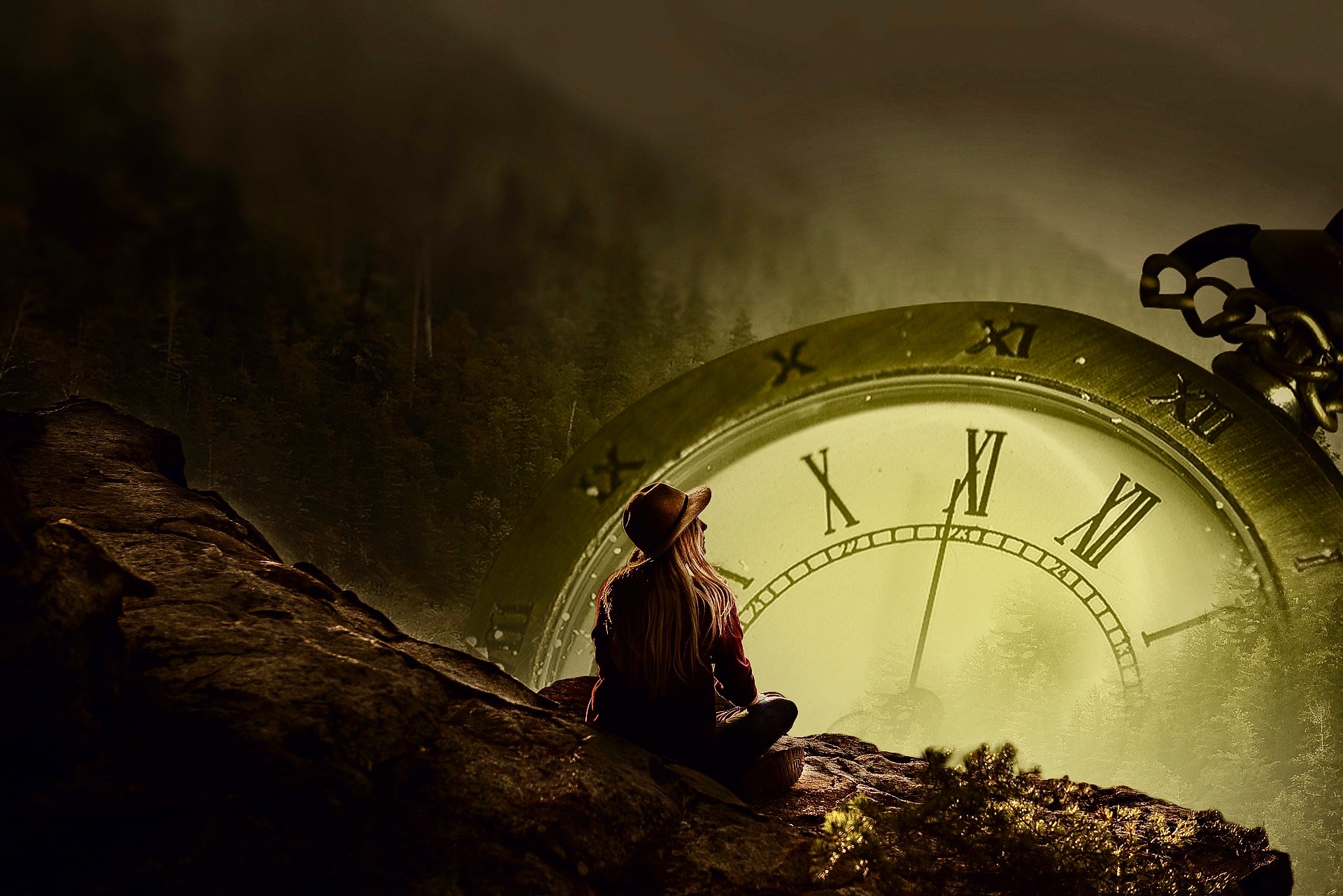
And before time is grasped as the past or the future, it only exists ‘here and now.’
Nevertheless, people──and we too──are convinced that time is a resource that can be saved and accumulated. However, such time never returns. Savings and interest are all nothing more than illusions created by the Grey Gentlemen. Because the time called ‘now’ always exists only ‘here and now.’
The time that is here and now
Michael Ende may have intended this for children.
But today, the people who should read this story most are the adults who, while claiming they have ‘no time,’ desperately keep scrolling through their screens.
Everyone is busy with work—that is a given. However, being busy with work is by no means the same thing as ‘having no time.’
Beppo the road sweeper says:
‘You must never think of the whole street at once, do you understand? You must only think about the next step, the next breath, the next stroke of the broom. Always just the next thing.’
p55
He pauses again to think, and then adds,
‘Then it becomes enjoyable. That is important; if you enjoy it, the work goes well. That is how it must be done.’
And after another long pause, he continues,
‘Before you know it, you have finished the whole street, step by step. You don’t even know how you did it, and you aren’t out of breath.’
Beppo nods to himself and concludes,
‘That is what is important.’
Even in the midst of busyness, ‘time’ is truly there. It is just forgotten while we are preoccupied with work.
The story of Momo reminds adults who claim to be busy that ‘time’ is right there in front of them once again.
That is likely the reason why this story has not faded even after more than half a century.
コメント